



Writer: Ruby (Ruiran Chen)
Food is not just fuel. It’s the foundation of how we live well, shaping both our physical and mental health. With information overload, information often conflicting diet advice floating around social media and expert forums, do you really know how to eat? Don’t worry: by the end of this blog, you’ll have a clearer sense of what eating well actually looks like.
Why Women’s Nutrition Deserves Attention
Although healthy eating matters for everyone, women may experience nutritional needs that change throughout different stages of life.
Biologically, a woman’s nutritional needs shift far more dramatically across her lifetime than a man’s. From her first period to pregnancy to menopause, her body asks for different things at different stages. Monthly blood loss means she loses iron throughout her reproductive years, which is why iron-deficiency anemia is far more common in women than in men. During pregnancy, nutrients such as folate, iron, iodine, and calcium become especially important. Later, the drop in estrogen around menopause directly affects how quickly she loses bone density, while hormonal shifts can also bring more mood fluctuations. A man’s nutritional needs, by comparison, stay relatively steady across adulthood.
At the same time, women have long been underrepresented in clinical research, which means many “standard” recommendations were never fully tested on women in the first place.It wasn’t until the 1990s that U.S. policy formally strengthened requirements for including women in NIH-funded clinical research, and even today, much research still defaults to the “average 70-kg man.” So blindly following so-called “standard” diets can sometimes do more harm than good.
Culture and beauty standards shape how women eat, too. Women are the primary target of diet culture, carrying more of the pressure to be thin and to look a certain way. Add the influence of social media and celebrity culture, and the chase after “beauty,” along with the feeling of never being “thin enough,” fuels real anxiety, and can lead to a tense relationship with eating.
So when we talk about women’s nutrition, what are we really talking about? We want to tell you: you are enough, and you deserve to be taken seriously. Before deciding how to eat healthily, start by adjusting your attitude toward food. Food is not the enemy. Food is our friend. Food nourishes us and allows us to enjoy each other’s company when we eat in group settings. PLease don’t be afraid to eat, and don’t feel guilty for not being “disciplined” enough. The fact that you’re willing to learn about healthy eating means you’ve already taken a wonderful first step.
So How Should You Actually Eat?
When it comes to eating enough, calories are usually the first thing that comes to mind. On average, an adult woman needs roughly 1,600 to 2,400 calories a day. Where you fall in that range depends on your age, height, weight, and activity level: younger, more active people need more; older or more sedentary people need somewhat less. Pregnancy and breastfeeding raise the number further.
If you’d like a figure closer to your own situation, you can look up the “Estimated Calorie Needs” chart in the Dietary Guidelines for Americans, sorted by age, sex, and activity level. It’s an official, neutral reference with no weight-loss agenda.
But honestly, the exact number matters far less than eating enough and eating a variety of foods. Instead of counting to the last digit, try an approach that needs no math at all: the plate method. Picture your plate in four parts:
· Half for vegetables and fruit. The more colors, the better;
· A quarter for protein. Beans, eggs, fish, lean meat, and tofu all count;
· A quarter for grains, ideally whole grains like brown rice, oats, and whole wheat;
· Plus a little healthy fat (olive oil, nuts, avocado) and enough water.
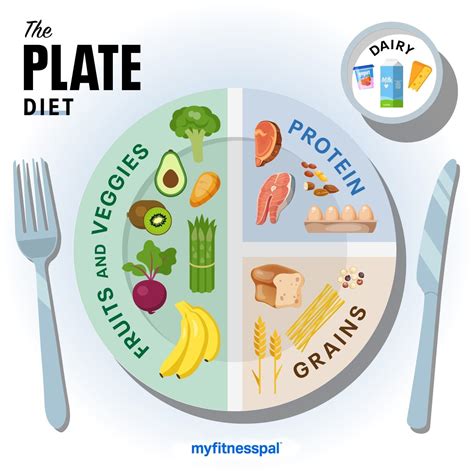
Rather than strict control, a mindset that’s much easier to sustain is gradual adjustment: grab an extra handful of greens, add a serving of beans, swap half your white rice for brown. Healthy eating isn’t about punishing yourself with subtraction. It’s about making your plate a little richer.
Different Stages, Different Priorities
A woman’s nutritional needs are a continuously shifting curve. The stages below overlap, but each one has something worth extra attention.
Reproductive Years & Menstruation · Focus: Iron
Monthly blood loss makes iron the nutrient reproductive-age women most easily fall short on, and long-term deficiency can bring fatigue, dizziness, and trouble concentrating.
· Eat iron-rich foods: red meat is one source, but plant-based options like beans, lentils, tofu, spinach, and fortified grains are also good sources of iron.
· Pair plant-based iron with vitamin C to boost absorption. Think sautéed spinach with tomato or bell pepper, or a citrus fruit after your meal.
· Some women may feel more tired or hungry around their period. This is especially not the time to eat less, because your body needs the energy to get through those days.
Trying to Conceive & Pregnancy · Focus: Folate first, then iron, iodine, and calcium
This is the stage where a woman’s nutritional needs change most dramatically, and the one that most calls for individualized care.
· Start folate early: it’s essential for the baby’s earliest neural development, which often happens before you even know you’re pregnant. So once you’re trying to conceive, begin getting it from leafy greens, beans, and fortified grains, and take folate or prenatal vitamins as advised by your doctor.
· Iron, iodine, and calcium all rise together: cook with iodized salt, make sure you have dairy or alternatives, and supplement as your doctor recommends.
· Food safety also matters in pregnancy (for example, avoiding raw foods, high-mercury fish, and unpasteurized products).
· In short: at this stage, don’t rely on generic online advice alone. Talking with your doctor or midwife is the single most important step.
Perimenopause & Menopause · Focus: Protect your bones and your heart
As estrogen declines, bone loss speeds up and cardiovascular risk rises, so the focus of eating shifts toward protection.
· Protect your bones: calcium and vitamin D become key. Dairy, fortified plant milks, leafy greens, and small fish with bones are all good sources. Get vitamin D from sunlight or supplements as advised.
· Preserve your muscle: muscle naturally declines with age, and spreading protein across all three meals works better than loading it into one.
· Protect your heart: more fiber and healthy fats, a little less added sugar and salt. Regular meals and moderate alcohol and caffeine can also help with the mood and sleep changes common at this stage.
No matter the stage, these are directions, not rigid rules. Your body, your budget, and your pace of life are all unique, and if you have a specific health condition, a registered dietitian or doctor can offer advice that fits you far better than any blog can.
Learn More: Trustworthy Nutrition Resources
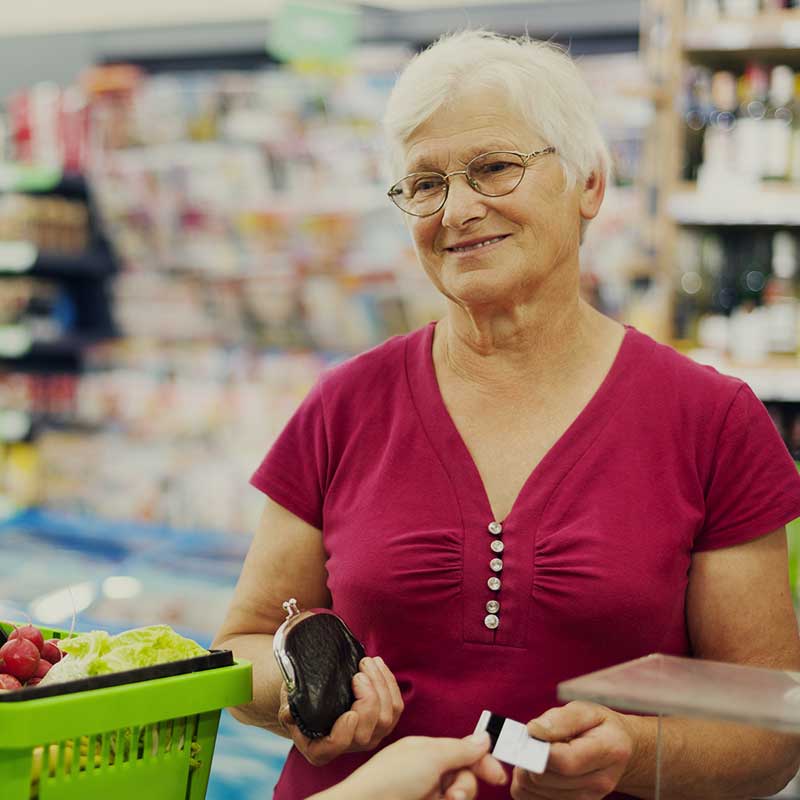
You’ve learned a lot by now. But eating well isn’t only a matter of knowledge. It’s also a matter of access. There’s a lot of “how to eat” advice online, and it’s hard to tell what’s real. Instead of believing whatever you happen to scroll past, bookmark a few sources that are genuinely credible, and free of ads and sales pitches:
MedlinePlus – Nutrition (https://medlineplus.gov/nutrition.html). The U.S. National Library of Medicine’s health-information library: plain-language, authoritative, with dedicated sections on women’s and prenatal nutrition. A great first stop when you want to learn more.
Office on Women’s Health (https://womenshealth.gov). The U.S. federal government’s platform built just for women, covering nutrition from menstruation to pregnancy to menopause.
Harvard – The Nutrition Source (https://nutritionsource.hsph.harvard.edu). Harvard’s public-health nutrition site; its “Healthy Eating Plate” is a lot simpler than memorizing complicated rules.
NIH Office of Dietary Supplements (https://ods.od.nih.gov). If you want the specifics on iron, calcium, folate, or vitamin D, how much you need and where to get it, this has authoritative, readable fact sheets.
And if you have a specific health condition (such as pregnancy, anemia, or a chronic illness), the most fitting advice always comes from a professional. Please consult your doctor or a registered dietitian.
How WCGL Supports You
Taking care of how you eat is one way of taking care of yourself, and we want to remind you that you are not alone.
At the Women’s Center of Greater Lansing, we are committed to supporting the mental health and well-being of all women and gender-diverse people. We provide individual counseling, support groups, and career readiness services, because we believe that every woman, regardless of her background, deserves access to mental health care and a space where she feels truly supported. We are also committed to advocating for racial justice and systemic change, because we know that true mental health equity requires more than individual support.
If you or someone you know needs support, we are always here for you.
Our website: https://lansingwomen.org/
More Local Resources
Eating well also means being able to get food on the table, and in the Greater Lansing area, there are resources to help, often with lower barriers than you might expect:
Greater Lansing Food Bank
Serving seven counties in mid-Michigan since 1981. Use the “Find Food” page on its website to locate the pickup site nearest you.
Website: https://greaterlansingfoodbank.org
WIC (Women, Infants, and Children)
For pregnant, postpartum, and breastfeeding women, and children under five: healthy foods, nutrition guidance, and breastfeeding support. If you already receive Medicaid, SNAP, or TANF, you automatically meet the income requirement.
Website: https://www.michigan.gov/WIC
MSU Extension – Nutrition
Michigan State University’s free, evidence-based nutrition education. Programs like Cooking Matters and My Way to Wellness teach you how to eat well, shop, and cook on a limited budget.
Website: https://www.canr.msu.edu/nutrition
No matter what stage of life you’re in or how much room your budget has, you deserve to be well nourished. Healthy eating isn’t a total self-overhaul. It builds up one meal, one choice at a time. Eat well, live well, starting with this very meal today.
References
American Heart Association. (2026). Healthy eating. https://www.heart.org/en/healthy-living/healthy-eating
Harvard T.H. Chan School of Public Health. (2026). Healthy eating plate. The Nutrition Source. https://nutritionsource.hsph.harvard.edu/healthy-eating-plate/
National Institutes of Health, Office of Dietary Supplements. (2026). Calcium: Fact sheet for consumers.https://ods.od.nih.gov/factsheets/Calcium-Consumer/
National Institutes of Health, Office of Dietary Supplements. (2026). Folate: Fact sheet for consumers.https://ods.od.nih.gov/factsheets/Folate-Consumer/